petlostboost

petlostboost is an independent information journal. It is not a veterinary clinic, it does not search for lost pets, it does not sell products, and it does not replace advice from a veterinarian. Full notice

Food · published · updated

Food: how to read the label and how to keep meals steady.

There is no brand that fits every animal. There are different species, labels that say who the food was made for, and the household kitchen, where a few foods have no place in the bowl.

Three worlds, three bowls

01

Dog

Complete food for dogs is the starting point for a healthy adult, in the amount discussed with a veterinarian if weight changes. Puppies have needs different from a senior's. Do not share your plate as a rule: cooked bones break into splinters.

02

Cat

A cat needs food made for cats. Dog food is not a substitute for a few days. Thirst and appetite that change suddenly are written down; they are not “corrected” by doubling the bowl without asking someone who has seen the animal.

03

Rabbit and guinea pig

For a rabbit, hay available all the time is the widely accepted base, not an extra. For a guinea pig, the need for vitamin C from food suited to them is added. Rabbit pellets, alone, do not usually cover that need. More on that below, separately.

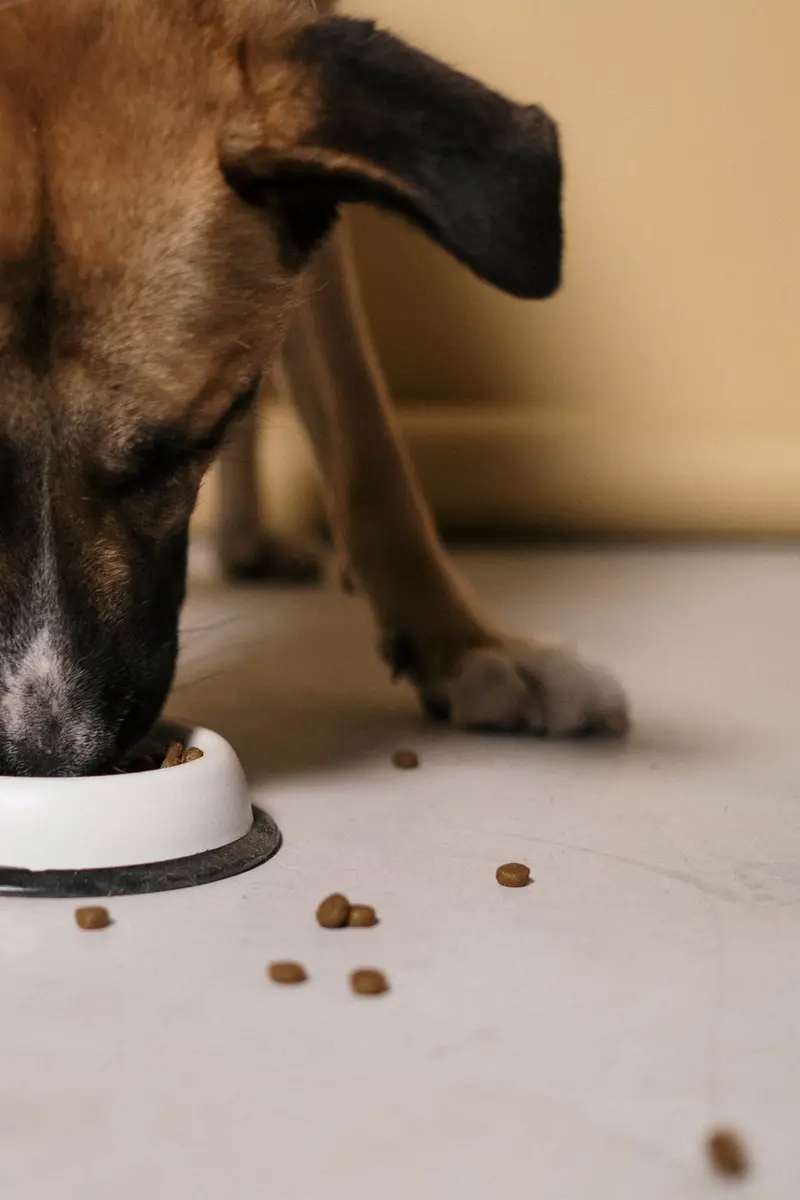
A dog eating kibble from a white bowl, with a few pieces spilled on the floor
Illustration of a dog's meal. The pieces on the floor show why the bowl sits on a surface that is easy to clean.

What you look for on the package

  • The species. The first check is who the food was made for: dog, cat, or the small species you have. A mix “for all animals” is not a plan.
  • Life stage. Many labels say whether the recipe is for a puppy, an adult, or a senior, or whether it is presented as complete food. If the wording is missing or you do not understand it, the question goes to the maker or to a veterinarian, not to a review.
  • The ingredient list does not say everything. The order gives an idea, but it does not replace whether the recipe is balanced for that species. We do not rank brands on this site.
  • Storage. The bag is closed and kept in a dry place, away from rodents. Opened wet food is kept cold and thrown out within the time written on the package.

The switch takes several days

A sudden change is a frequent cause of soft stool. A simple rhythm: for the first two days, about a quarter of the new food; then half; then three quarters; then only the new one. If repeated vomiting or a total refusal appears, you stop and call the clinic. You do not force the rest of the bag.

Treats stay a small part of the day. Cheese, bread, and leftovers are not “just a little” if they repeat at every human meal. Water is always available and is not replaced with milk. Many adults, especially cats, digest lactose poorly.
From the kitchen, these do not go in the bowl

The list is not exhaustive and it does not say what to do at home if the animal swallowed something. Call a veterinarian or an emergency clinic and say what, how much, and when. Do not induce vomiting from advice read here.

Food or product Who it often matters for Why you keep it away
Chocolate, coffee, tea, alcoholDogs and catsSubstances their metabolism does not handle the way ours does.
Grapes and raisinsDogsAssociated with kidney damage. There is no “safe piece”.
Xylitol (gum, some peanut butters, sweets)DogsCan drop blood sugar dangerously. Read the label of the human product.
Onion, garlic, leekDogs and catsIncluding in cooked food or powder. They are not an “innocent” seasoning.
Raw yeast dough, cooked bonesDogsDough can keep rising; cooked bones splinter.
Macadamia nutsDogsAssociated with weakness and trembling. Do not leave them within reach.
LiliesCatsThe plant, the pollen, and the water in the vase. Contact a veterinarian even if you only saw a lick.
Human medicines, especially acetaminophen and ibuprofenEspecially cats, and dogsThey are not given “until you get to the clinic”. Many are toxic.
Avocado, chocolate, coffeeBirdsKept away. Species differ; ask a veterinarian who knows birds.

Rabbit

Good-quality hay is available all day and is also tied to teeth that grow continuously. Pellets, if used, are measured, not left in a pile. New greens are introduced one at a time, in a small amount. A rabbit who does not eat and does not leave droppings for several hours needs a veterinarian the same day, not the next morning. More context is on the small pets page.

Guinea pigs and birds

Guinea pigs do not make their own vitamin C. A diet of only hay and rabbit pellets does not usually cover that need. A veterinarian can confirm portions for your animals; we do not give milligrams here. For birds, a seed mix alone is often poor for many species kept in cages. The recipe depends on the species. There is no universal menu to copy from this page.

Weight, water, and the open bag

How you see weight without a clinic scale

On a dog and a cat, the ribs are felt under a thin layer. They do not disappear and they do not stick out like steps. The waist, seen from above, is there. A change over a few weeks is measured on the same scale, in the morning, before a meal, and taken to a veterinarian. Do not cut the portion in half in one day, and do not double the bowl because they “look hungry”. Puppies need to grow; seniors can lose weight from illness, not from a diet invented at home.

Water is not an accessory

A wide bowl, washed daily, away from the litter box for a cat and away from a corner the dog cannot reach because of noise. More bowls in a house with stairs. Milk does not replace water. A fountain can help some cats drink, but it is not required and we do not sell one. Sudden thirst — the bowl emptied several times a day, without extreme heat — is noted with times and told at the clinic.

Where the food stays

The bag is closed, kept dry, and raised off the floor if the building has rodents. An opened can goes in the cold and is thrown out within the interval written on the package, not “while it still smells fine”. Treats are counted in the day. They are not left within reach. If you share the house with a child, chocolate, gum, and grapes do not sit on a low table. The kitchen list above is worth rereading when someone brings a platter.

For a rabbit, stopping eating is not treated with a new treat and waiting until the next day. For a guinea pig, the same urgency if they sit still and do not touch the hay. For a bird, empty seed hulls in the tray can mean they ate only the shell and left what they needed. The species decides the conversation with the veterinarian, not a single piece of advice. See also space and routine for small pets.

Top