Dogs
The daily routine of a pet dog.
A dog settles more calmly when the day has an outline: fresh water, an outing, a meal at recognizable times, and a place to stay without being stepped on. This page is not a training plan and it does not say how many miles a dog “must” walk. It says what is worth noticing at home.
Water and the first outing
The bowl is washed, not only topped up. Stale water with bits in it is an ordinary reason a dog walks past it. If one day they drink much more, or almost not at all, and the change lasts through several meals, the note is for a veterinarian, not for a forum.
After sleep, most dogs need to go outside before play. The same door, the same short route, without a rush. A puppy cannot wait through a full workday; their bladder does not keep an adult's schedule. If accidents appear in the house for a dog who used to go out regularly, look for the change: schedule, food, stress, pain. Do not assume “stubbornness”.
Exercise is measured on the dog in front of you
Age, weather, weight, and an old pain change the outing. A young dog may ask for more movement than a senior, but that still does not become a fixed number. Watch how they breathe after you get home: panting that settles in a few minutes is different from panting that continues, from limping, or from refusing the stairs.
In heat, shorten the walk, look for shade, and take water. Hot asphalt is checked with the back of the hand: if it is unpleasant for you, it is worse for the pads. In winter, salt on the sidewalk irritates the pads; a rinse when you get back is a simple step.
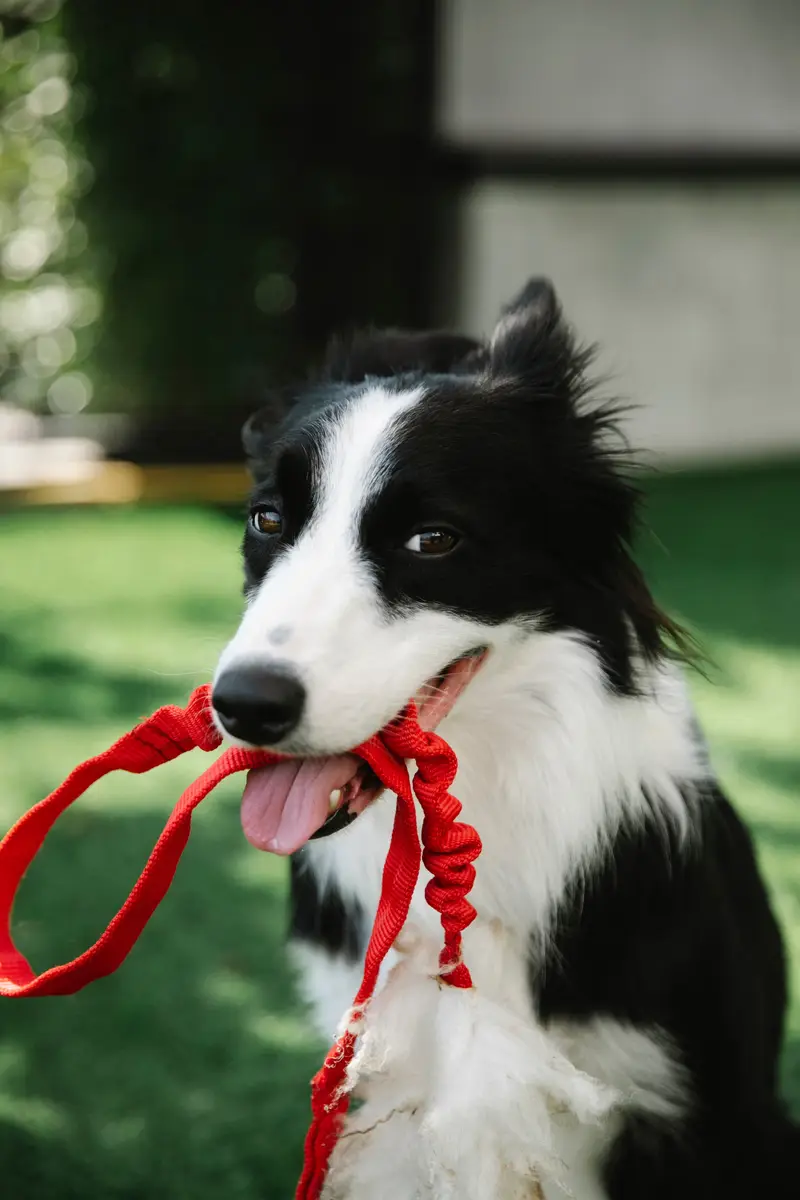
A leash and harness fit if you can slide two fingers under the strap and if it does not rub the armpit. A broken leash or a harness that slips is not “fixed” while you keep walking. For signs of effort beyond ordinary tiredness, see signs of discomfort.
Meals, not snacks on the move
Two meals for an adult are a rhythm often used, not a rule carved in stone. Puppies eat more often. The amount on the package is a starting point, not an order: the dog's weight, activity, and what the veterinarian says move it. If the waist changes visibly over a few weeks, take the observation to the clinic. Do not change the diet alone because of an ad.
A new food is introduced over several days, mixing in more of the new one each time. A change in a single meal often upsets the stomach. Table scraps are not a feeding system: cooked bones splinter, and some kitchen foods are toxic. The list is on the page about food.
After a meal, leave a pause before running and intense play. In some dogs, especially those with a deep chest, effort right after eating is linked to an abdominal emergency. If you see a swollen abdomen, restlessness, and repeated attempts to vomit, call an emergency clinic. Do not wait for it to “pass”.
A place of their own, not a corner people walk through
The bed stays away from drafts and from the door everyone steps through all day. The dog should be able to stretch out. A crate can be a small room only if the dog enters it calmly and it is not used as punishment. Not every dog needs one. If you introduce it, leave it open at first, with something soft inside, and do not close the door for many hours on the first day.
Toys are checked: a swallowed piece, a string, a torn object become a clinic problem. Do not leave medicine, chocolate, or gum with xylitol within reach. See also the tag on the collar, so their place in the house has a counterpart if they go out the door.
Coat, nails, ears, teeth
Brushing depends on the coat. A short-haired dog needs less than a long-haired one, who mats under the arms and behind the ears. Mats pulled by force hurt. If you cannot manage, a trim by someone who works with dogs is less stressful than a fight at home.
Nails that click on the floor and make the dog slip are long. On pale nails you can see the pink area; the cut stops before it. If you have not done this before, ask someone with experience to show you once. If there is blood, press with a clean compress. If it does not stop, call the clinic.
The ear is wiped where you can see, without pushing a swab into the canal. Redness, a strong smell, or frequent head shaking are reasons to book. Teeth can be brushed with toothpaste for dogs, not with people's toothpaste. Frequent gum bleeding or a smell that appears suddenly is shown to a veterinarian.
The hours they stay alone
Not every dog can handle a full workday without anyone seeing them. The signs that matter are concrete: scratched doors, continuous crying reported by neighbors, pacing in circles, mess in the house from a dog who otherwise goes outside. Before you leave, a short walk, fresh water, and a room without cables or scraps lower the practical risks. We do not promise that a chew object “solves” fear of being alone.
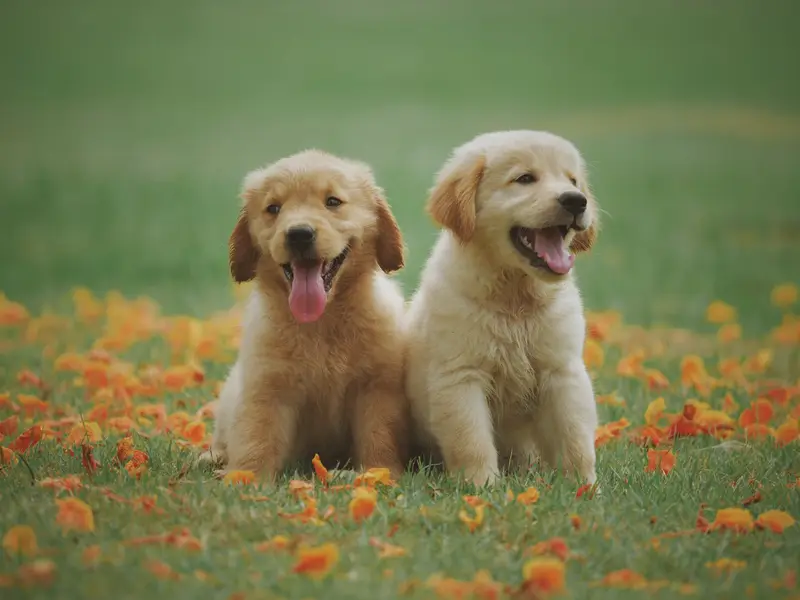
Two puppies of the same age, as in the photograph below, do not mean that one puppy “keeps the other company” and can be left unsupervised. They chew each other, eat what they find, and do not take themselves out when they need to.
Three lines that help at the clinic
- Whether they ate and drank as usual, or since when that changed.
- Stool and urine: color, straining, blood, if you saw them.
- Movement: limping, refusing stairs, new itching, a lump you felt.
How you take these notes to an appointment is in preparing the visit. For the limit of this text, the information notice still applies: it does not replace an exam.
Weather, the car, guests
In the rain, a short outing is still an outing. The towel stays by the door, the paws are wiped, and salt or mud does not stay in the pads until evening. In a heat wave, asphalt is tested with the back of the hand and the walk moves earlier or later. In the car, the dog is buckled in or in a fixed crate. They are not left in a parked car “for two minutes”: the temperature rises without it looking, from outside, as if the cabin has heated up.
Guests change the day. A dog who barks at the doorbell needs a place to stay without being greeted by everyone at once. Children are taught not to lean over the bowl and not to pull ears. If a second dog arrives, the resources double: two bowls, distance at meals, separate walks at first. There is no day from which they “should get along”.
A puppy and a senior do not share the same rhythm. The puppy eats more often, falls asleep suddenly, and cannot hold their bladder through a workday. The senior may refuse stairs, may drink more, and may need shorter, more frequent outings. Both variations are told to the veterinarian with facts, not with the impression that they “have gotten old” or are “still small”. For signs that are not about age, go back to the observation list.
The house, seen from their height
Before you leave, lower your gaze: the trash can without a lid, the charger cable, the chocolate on the table, gum, medicine, a new plant. A dog explores with the mouth. You do not need a shopping list to close a door or move a jar.
The toy stays whole. If it breaks and a piece is swallowed, do not wait to see “if it passes” when the dog vomits repeatedly or stops eating. Call. Do not induce vomiting from a text on the internet. Food, and the things that do not go in the bowl, are in the food guide.
When you get home, a short greeting and then water and the door are more useful than ten minutes of excitement. If neighbors say the dog barked the whole time, believe the report and shorten the absence or ask someone to stop by. Do not buy a device that “solves” being alone. This page does not sell and does not rank objects.